
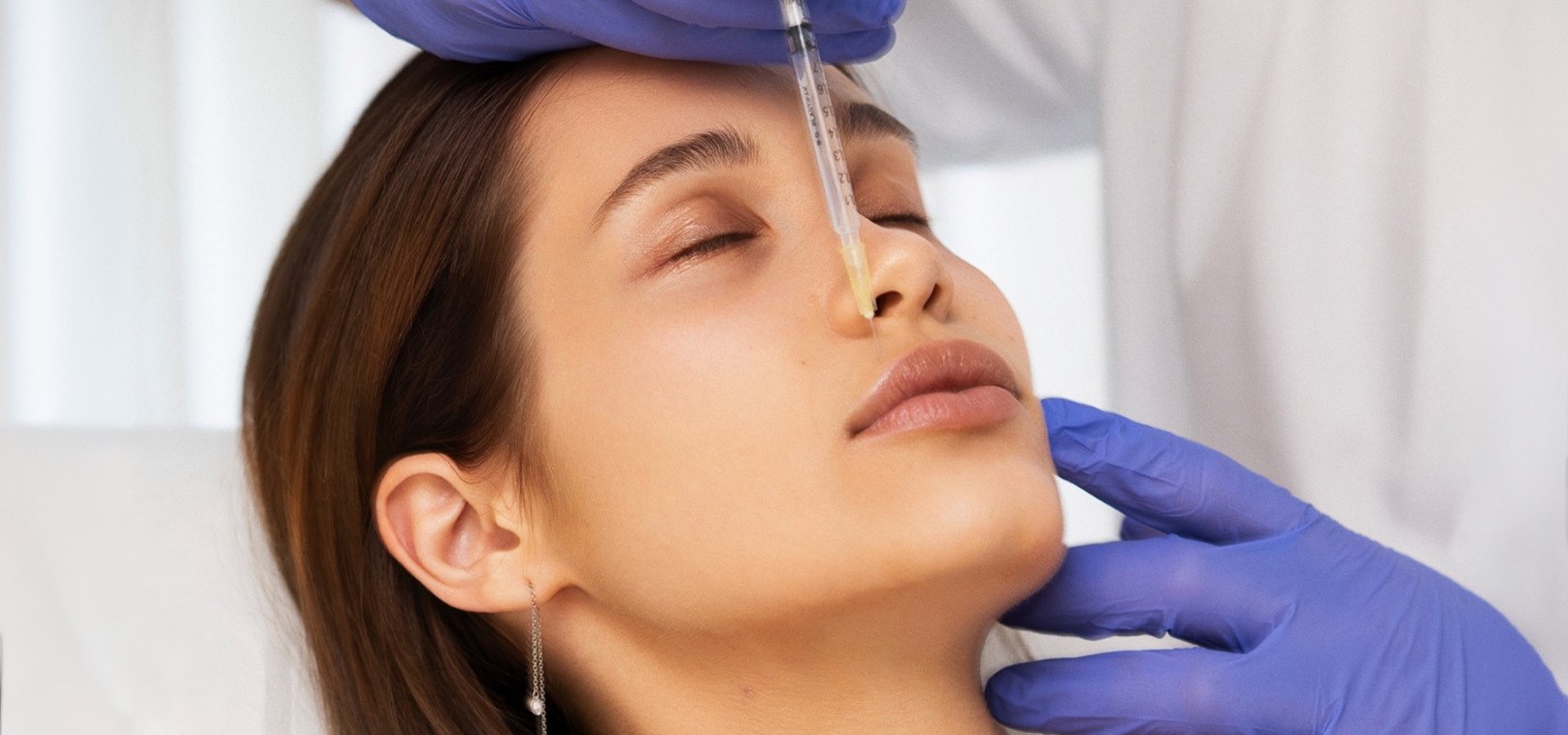
Written by: dr Nikola Milojević
More than 20 years ago, when I began my journey in aesthetic medicine in London, the field looked almost unrecognisable compared with what we know today. The range of treatments was much narrower, technologies were simpler, and aesthetic medicine was still a relatively small and unexplored area of medicine. We most commonly administered Botox and hyaluronic acid dermal fillers, and there were incomparably fewer doctors specialising in aesthetic medicine. We had fewer options than we do today, but quality was much easier to recognise and, in a way, almost guaranteed.
Today, the situation is completely different.
In the meantime, aesthetic medicine has grown into a large and highly competitive industry. New treatments, products and technologies appear every day, making it increasingly difficult for patients to assess what they truly need and whom they can trust. Social media has further changed the way we perceive aesthetic treatments - before-and-after photographs create the impression that results are easy to compare, while prices for the same or similar treatments can vary severalfold.
At the same time, social media has also made numerous examples of poorly performed aesthetic procedures more visible - from overly accentuated lips and cheekbones to distorted proportions and filler migration. In recent years, such examples have contributed to a certain distrust of fillers, which is why people now often ask whether fillers are necessary at all and how safe they are.
I’ll let you in on a "secret”. In the vast majority of cases, the problem is not the fillers themselves, but rather how they are used, the amount administered and the expertise of the person administering them.
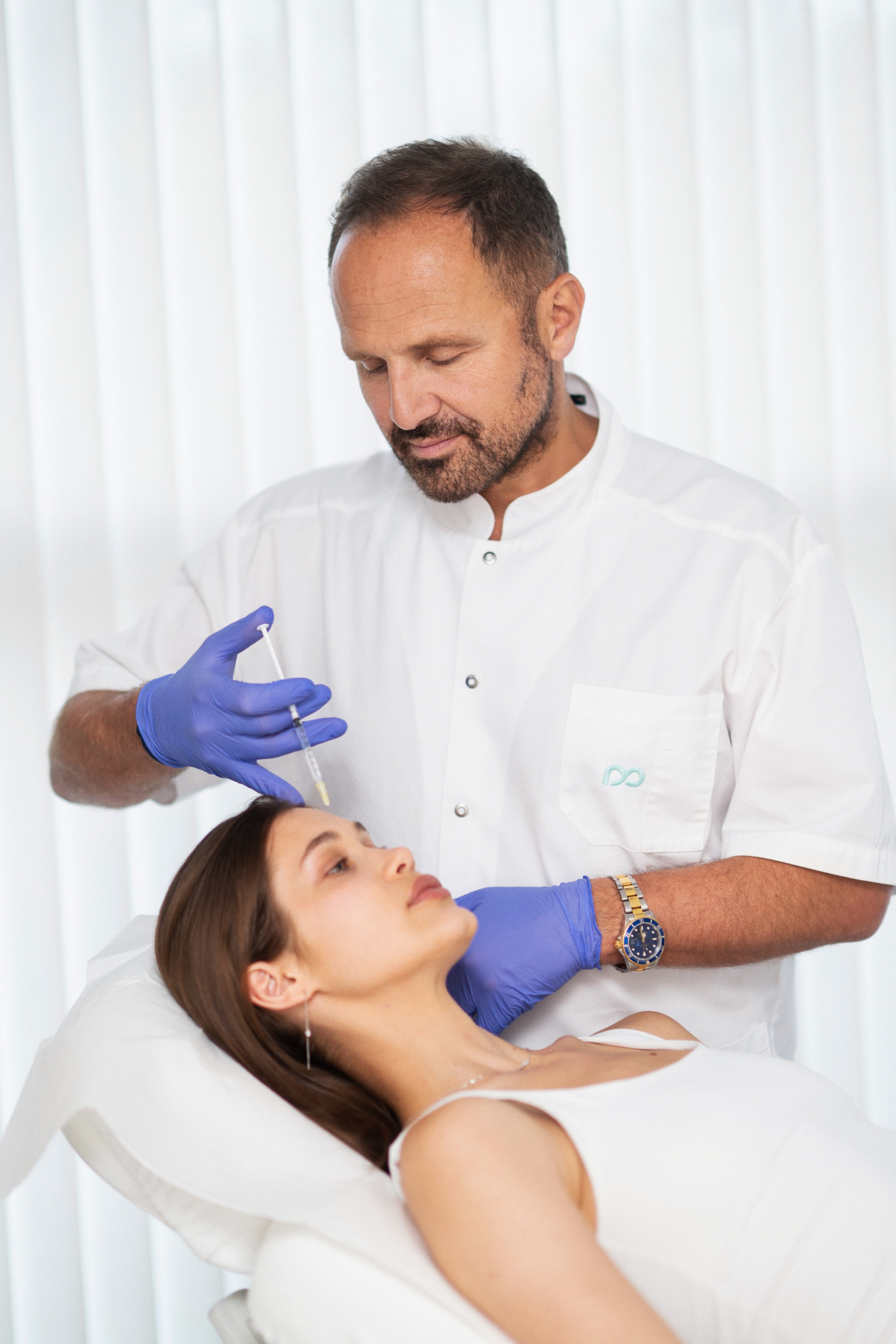
In expert hands, when properly indicated and used judiciously, dermal fillers remain, alongside botulinum toxin, among the most important and effective tools in modern aesthetic medicine. Their purpose is not to change the face or "fill it up”, but to restore very precisely what the ageing process has taken away, correct proportions where necessary, and preserve a natural appearance in the process.
Unfortunately, aesthetic medicine today is a field in which very different levels of experience, training and expertise coexist. As the market has grown, so has the number of people performing injectable and other aesthetic treatments without sufficient experience or appropriate medical training. It is particularly concerning - and, I would even say, shocking - when medical-aesthetic procedures are performed outside an appropriate medical setting and without the necessary professional qualifications.
With injectable treatments, knowing the injection technique is not enough. A thorough knowledge of facial anatomy is essential, as is understanding the face as a whole, properly assessing the patient’s needs, and selecting the appropriate product, amount and injection technique. It is equally important to recognise when a particular treatment is unnecessary and to be able to respond promptly and manage any potential complication professionally.
The face is no place for experimentation!
That is precisely why I believe that today, when the choice of treatments and technologies is greater than ever, it is crucial to know whom to trust with your face.
Because when it comes to your face, the consequences of a poor decision cannot simply be hidden or ignored.
After more than two decades of working with patients, I would say there are several things I myself would want to know before allowing someone to treat me.

1. Don’t choose the treatment. Choose the doctor first.
Patients increasingly come to us having already diagnosed themselves and decided on a treatment based on advice they found on social media or ChatGPT.
"Doctor, I need under-eye filler.” "I want lip augmentation.” "I want Botox.” "I want to tighten my face with this laser.”…
But a good aesthetic doctor must look at you first and only then discuss treatment. Today, patients often arrive very well informed about individual treatments and convinced they know what they need - under-eye filler, for example. This is precisely why a doctor’s holistic and individualised approach is so important.
You may think you need filler in your nose, while the real issue with your profile proportions is actually an under-projected chin. You may want more filler in your cheeks, while your face would benefit more from improving skin quality and tightening the skin. You may have come for Botox, only for the doctor to tell you that, at that moment, you do not need anything.
Patients know very well what bothers them. But they do not necessarily know what will solve that problem best.
That is the doctor’s job.
2. Sometimes the best treatment is the one your doctor refuses to perform
This may be the most important advice I can give.
Be somewhat cautious of a place where the immediate answer to everything you ask for is: "Yes, we can do that.”
A good doctor must know how to say no.
You don’t need more filler. You don’t need Botox in that area. That laser is not suitable for your skin. Your expectations of that procedure are not realistic. Or simply: you look good, and I wouldn’t do anything to you today!
In my opinion, that is one of the best indicators of quality in aesthetic medicine.
A doctor is not a salesperson for treatments! Our job is to assess the whole face carefully, understand what bothers the patient and what they want to achieve, and determine which of the available options could genuinely benefit them. And sometimes the best recommendation is simply to do nothing for the time being.
3. A consultation is not a formality. It may be the most important part of the treatment.
A good consultation is not a five-minute conversation in which the doctor asks: "What would you like to have done?”
I like to ask patients: What bothers you when you look in the mirror? How would you like to look? This kind of conversation gives the doctor a much better understanding of what the patient actually wants to achieve.
During the consultation, the doctor should assess the whole face, not just a single wrinkle or under-eye hollow. It is important to understand the anatomy, how the face ages, skin quality, muscles, volume and proportions, but equally important to understand the person sitting in front of them, their wishes and expectations.
The goal is not to create a different face, but to find the best, fresher and more rested version of your own face.
That is precisely why individual consultations and selecting treatments according to each patient’s needs form the foundation of our approach at the Poliklinika Milojević.
4. Look at the doctor’s experience - but also at their results
A diploma is the beginning, not the end.
Check who will be treating you, how long they have worked in aesthetic medicine, how often they perform the particular procedure, and whether they undertake continuous professional education.
And then look at the results.
Before-and-after photographs can tell you a great deal about a doctor. Don’t look only at whether the results are dramatic. Look at the style. Do all patients look the same? Are the lips always the same? Are the cheeks over-accentuated? Or does every person still look like themselves after treatment?
After all these years, my philosophy can actually be summed up very simply: the best aesthetic treatment is one after which you look better, fresher and more rested, without anyone noticing that you have had anything done!
Someone will tell you that you look rested. Fresh. Well. They may even ask whether you have been on holiday… but they will not ask what you have had done to your face!
For me, that is the best indicator of a successful aesthetic treatment, and that is precisely where I see the purpose of aesthetic medicine.
5. Why isn’t the cheapest offer necessarily the best offer?
This is a sensitive topic, but one that needs to be discussed openly.
A high price is not, in itself, proof of quality. But when it comes to a medical procedure, the lowest price should not be the main criterion when making a choice.
When you pay for an aesthetic treatment, you are not paying only for a few millilitres of a product or half an hour spent on a device.
You are paying for the knowledge and experience of the person assessing your face. You are paying for an authentic, verified product. A high-quality medical device. Trained staff.
Hygiene and medical standards. Time for consultation. Safety during the procedure. And, extremely importantly, someone who will be there for you if you have a question after the procedure or if a complication occurs.
A high price is not, in itself, proof of quality. But when it comes to a medical procedure, the lowest price should by no means be the main criterion when making a choice.
When it comes to your own face, it is more important than price alone to know who will treat you, what experience they have, which products and technologies they use, and what level of safety and support they can provide.
6. Not every filler is the same. Not every laser is the same.
At first glance, different boxes of hyaluronic acid fillers may look very similar to a patient. The same applies to devices - externally, they may appear almost identical, even though they are based on entirely different technologies and capabilities.
Not all products and devices are the same, and their differences are not always visible at first glance.
At Poliklinika Milojević, we have therefore consciously built a broad range of treatments over the years and have sought to select proven products and technologies. Among hyaluronic acid fillers, we use established products such as Restylane and Juvéderm, while among biostimulators and regenerative treatments we offer various options from high-quality brands such as Sculptra, Sunekos, Skinvive, HArmonyCa and Plinest polynucleotides.
The market is currently flooded with copies of all these brands, which represents a serious problem. This is yet another reason to choose carefully the doctor and clinic to whom you entrust your face.
The same applies to technology. Leading devices in aesthetic medicine, such as UltraClear, Morpheus8, Ultherapy, EMFACE, EMSCULPT and other platforms, are not there so that we can offer every treatment to every patient.
Quite the opposite.
The more high-quality tools a doctor has at their disposal, the less need there is to solve every problem with the same tool.
If all you have is a hammer, every problem starts to look like a nail.
In aesthetic medicine, that is never a good thing.
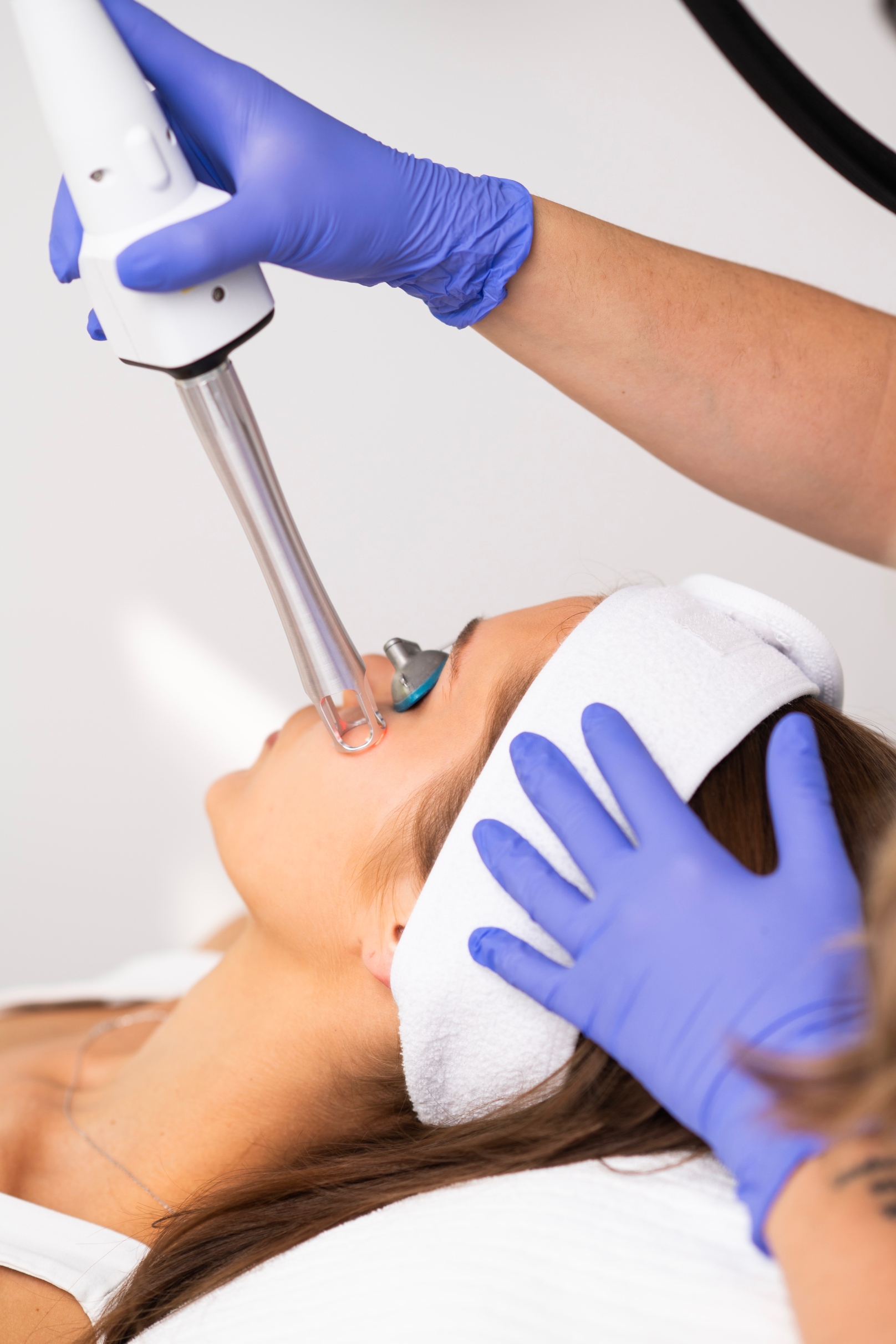
7. Be cautious of places that offer only one "miracle” treatment
There is no single best laser. There is no single best filler. There is no single best biostimulator. And there is no single treatment that addresses every sign of ageing!
Some people need a little Botox. Some need restoration of lost volume. Some need biostimulation. Some need a laser. Some need tightening of deeper structures. And for many patients, the best result comes from a carefully considered combination of several methods.
Modern aesthetic medicine is increasingly based on precisely these kinds of personalised combinations - from fillers and Botox to biostimulators and technologies that act on the skin, muscles and deeper structures.
That is why I would always choose a doctor who has options over a doctor who offers the same treatment to every patient.
8. Ask questions. A good doctor will not be afraid of them.
Before treatment, feel free to ask:
- Who will treat me, and how long have they been performing this procedure?
- Which product or device do you use, and why have you chosen this particular one?
- Is there a better alternative for me?
- What results can I realistically expect?
- How long do the results last?
- What are the possible complications?
- What happens if I am not satisfied with the result?
- Who can I contact if I have a problem after the treatment?
- And perhaps my favourite question: Doctor, if this were your face, would you have the same treatment?
A serious doctor will not be offended by such questions. On the contrary, open communication and an informed patient are an important part of every good doctor-patient relationship.
9. Websites and social media are not irrelevant
Of course, a website can make a good first impression, but in itself it is not proof of a doctor’s expertise. Nevertheless, today you have the opportunity to learn about a doctor and their work in a way that was not available to patients 20 years ago.
Look at how long the clinic has been operating, who works there, and whether there is clear information about the doctors, the entire team of nurses and cosmetologists, and the treatments they offer. Pay attention to their genuine before-and-after results, but also to the content the doctors publish - what they write, what they talk about and how they approach their work. It is important to recognise whether the emphasis is on expertise and education, or whether the communication is mainly focused on promotions, discounts and selling treatments.
Reputation is built over years, not overnight.
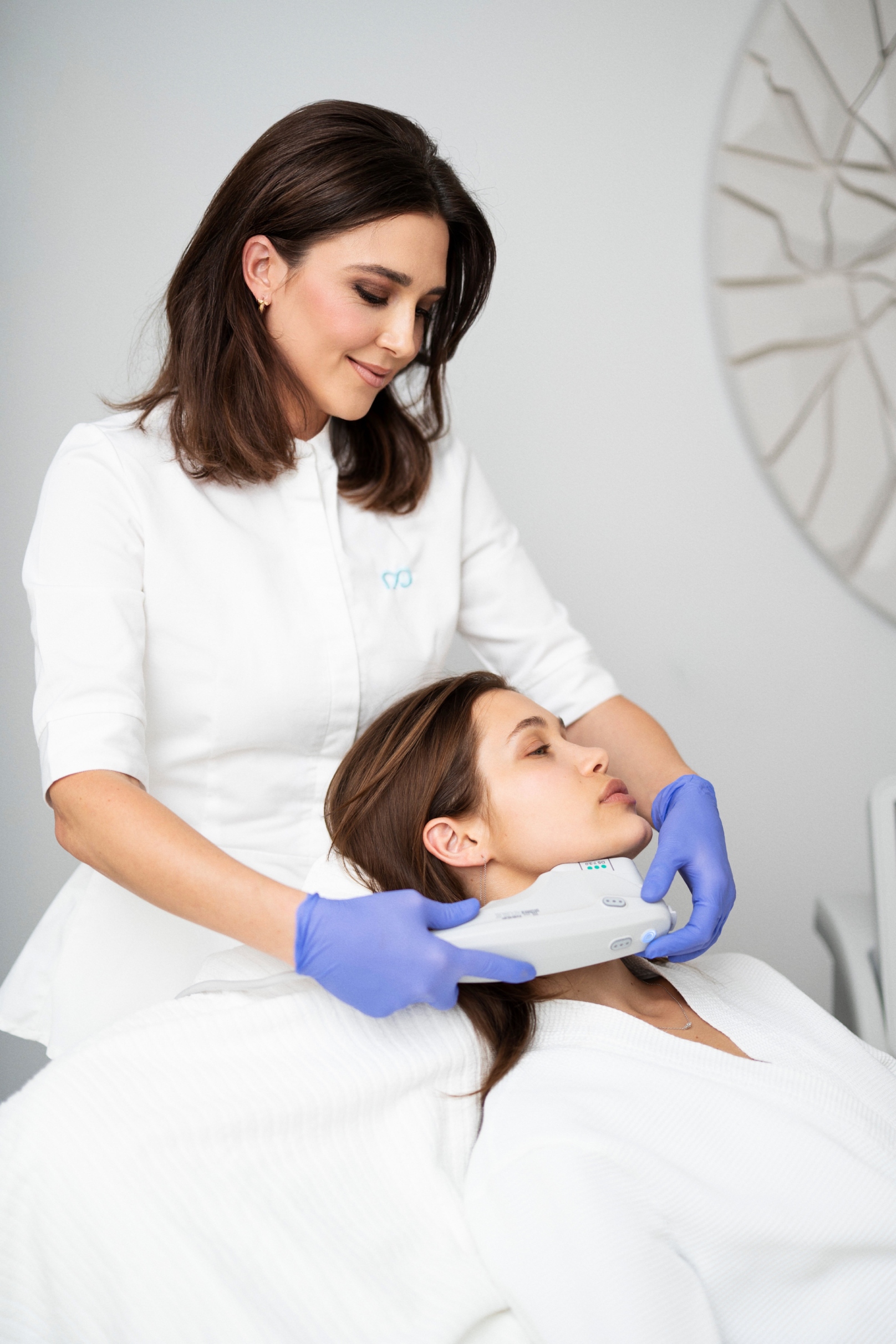
10. And finally — trust your instincts
After more than 20 years working in aesthetic medicine and treating a large number of patients throughout my career in London and Zagreb, experience has taught me how important a sense of the face, proportion and restraint are in this field, alongside medical knowledge and technical precision.
Aesthetic medicine is medicine, but it also has a strong artistic component. Anatomy can be learned. You can learn where to administer a particular product, how much energy to use in a laser treatment and what quantity is required for a particular procedure.
However, a sense of facial proportions and, perhaps most importantly, restraint comes with experience, but also with a certain - I would even say innate - aesthetic sensibility that cannot simply be learned.
When you sit down in front of a doctor, it is important to feel that they are truly listening to you, that they understand what you want to achieve and that they are not trying to turn you into someone else. It is also important that they are not thinking only about the treatment you will have today, but about how you will look in five or ten years.
Sometimes they will recommend exactly the treatment you wanted. Sometimes they will suggest something you had never considered. And sometimes they will simply tell you: "I wouldn’t do anything to you today.” And perhaps that is when they will do the most for you.
Because in the end, you are not just choosing Botox, filler or a laser. You are choosing the doctor to whom you will entrust your face.
And you only have one face.